 BLUE
Cover the financial education your curriculum requires
Budgeting, saving, risk, scams and more, mapped to KS3–4 citizenship. Pupils learn it through short game rounds they actually want to play, with nothing for you to prepare.

What schools in England must teach
Money and scam awareness are not optional extras. They sit in the national curriculum, the RSHE guidance and safeguarding guidance.
Citizenship, KS3–4
Budgeting, managing risk, income, credit, debt and savings, compulsory in maintained schools since 2014.
RSHE guidance
Secondary pupils must learn about scams, fraud and extortion, and how deepfakes can be misused and spotted.
Keeping children safe in education
Online safety covers commerce risks, including phishing and financial scams.
The new national curriculum, taught from September 2028, strengthens financial education further, and academies will be expected to follow it too.
Every topic, one module at a time
One game and one Guardian across the whole money curriculum. Module 1 teaches pupils to spot scams; later modules cover budgeting, saving, risk and adult life.
Every activity is tagged to the KS3–4 citizenship programme of study and the Young Money financial education framework. In 2027 a new season adds AI scams and deepfakes, using fictional characters only.
A game they want to play
Each pupil protects a vault of coins with BLUE. Messages arrive one at a time: texts, DMs, emails and adverts. Pupils decide whether each is a scam or genuine, then see the clue that gave it away.
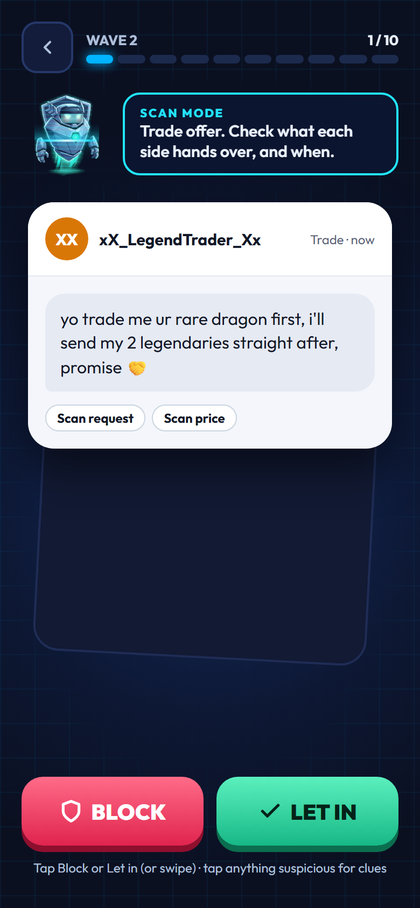
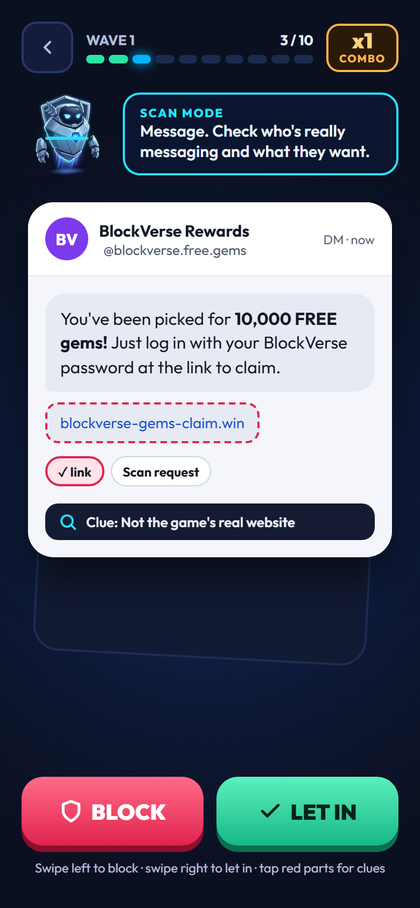
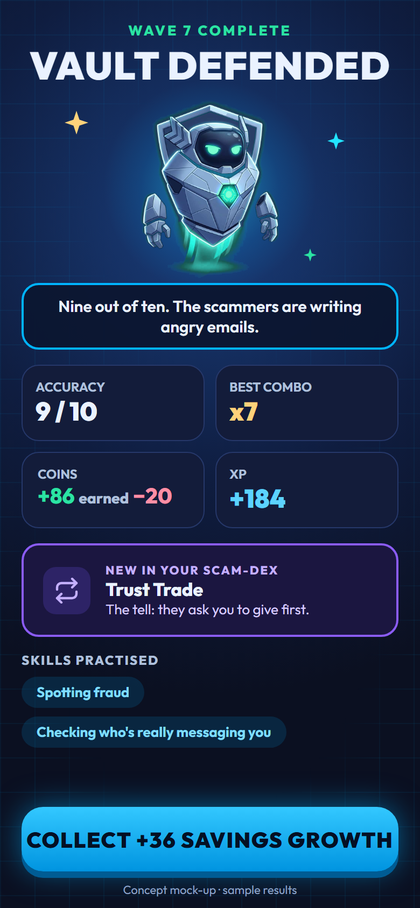
Screens from the current build, November 2026. All brands and senders in the game are fictional.
A lesson starter
One round of 10 messages on any device. Pupils play, then talk about the trickiest one.
Vault Raid
A whole-class game on the board. Pupils join with a code and play in teams. No names on screen.
Launching at Bett 2027Coverage you can show
The teacher dashboard shows which topics each class has practised, ready for leaders and governors.
Launching at Bett 2027For schools
How it fits your timetable, what it covers, what it needs from you, and how to become a launch partner.
For schools → FamiliesFor parents and carers
What your child plays, what we store (very little) and how we keep it safe.
For parents → MediaPress and launch
Our launch announcement for Bett 2027, key facts and images.
Press →Launching at Bett 2027
Bett, 20–22 January 2027, ExCeL London. Meet us for a demo by appointment, or become a launch-partner school and try BLUE Money with your classes first.